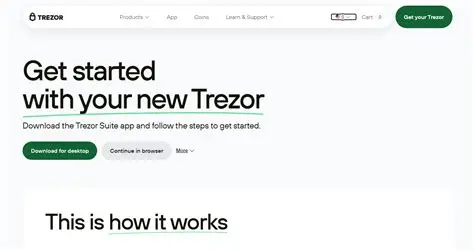
Trezor.io/Start — The Official Setup Route to Taking Full Control of Your Crypto
The growth of cryptocurrency has opened the door to financial freedom, but it has also created an environment where digital theft is constant. Every month, millions of dollars are lost to phishing attacks, compromised exchanges and malware. For anyone holding crypto long-term, safety is not a luxury — it is a requirement.
This is why hardware wallets like Trezor have become the gold standard for self-custody. Unlike mobile or web wallets, Trezor keeps private keys offline and secure inside a physical device. The correct and safest way to activate that device is by visiting Trezor.io/Start, the official onboarding portal for new users.
This article walks you through everything you need to know — from initial setup to advanced security tools — so you can manage your crypto with confidence and full control.
Why Trezor Exists — A Wallet Designed for Real Ownership
Cryptocurrency was built on the idea of decentralization. That means you don’t need a bank or a middleman to move money. But if your private keys are stored in an online wallet or an exchange account, someone else still has power over your coins.
Trezor eliminates that problem by putting the keys directly in your hands.
Trezor in Simple Terms:
Hardware wallet that keeps private keys offline
Wallet operations approved physically on the device
Recovery phrase ensures access even if the device is lost
Totally independent of centralized custodians
If crypto is digital property, Trezor is the unbreakable vault that keeps it safe.
Why the First Step Must Be Trezor.io/Start
When setting up a hardware wallet, downloading software from unofficial sources can be dangerous. Criminals often create fake links disguised as wallet applications to steal users’ recovery phrases.
Using Trezor.io/Start guarantees:
Authentic firmware
Safe and verified installation files
Accurate step-by-step onboarding instructions
No opportunity for scammers to intervene
If you bought a brand-new Trezor device, this link is where your crypto safety begins.
The Trezor Setup Process — Complete Walkthrough
Below is a structured guide to setting up your wallet correctly using Trezor.io/Start.
1. Box Inspection and Device Authentication
Your package should arrive sealed and untampered. Inside you should find:
A Trezor device
USB connector cable
Recovery seed cards
Documentation and guide sheet
Security hologram
Any unusual packaging marks, broken seals or suspicious differences should be treated seriously — do not continue setup if the device appears compromised.
2. Connect Trezor to Your Computer
Using the cable, attach your Trezor to a computer input port.
Once connected, open a secure browser and go to:
🔗 Trezor.io/Start
Choose your model to begin — Model One, Model T or Safe 3.
3. Download & Install Trezor Suite
Trezor Suite is the companion application designed for wallet management. Through it you can:
Access portfolio overview
Send and receive cryptocurrencies
Swap and buy supported coins
Monitor transaction history
Customize security settings
Supported operating systems:
Windows
macOS
Linux
Trezor Suite ensures that private keys never touch the internet or your computer. They remain locked inside the device.
4. Firmware Installation — Mandatory for Security
For safety reasons, Trezor devices ship without preinstalled firmware.
After launching Trezor Suite, you will be prompted to install the latest version.
✔ Click to install
✔ Confirm on your device screen
⚠ Only install firmware through Trezor Suite — not from random links, emails or external websites.
5. Choose: Set Up New Wallet or Recover Existing Wallet
You will have two options:
Create New Wallet
Generates a brand-new cryptographic identity that belongs entirely to you.
Recover Wallet
Restores an older wallet using an existing 12–24 word seed phrase from a Trezor or another compatible wallet.
To protect users, recovery words must never be typed on a computer — they are entered on the Trezor device directly.
6. Backup Your Recovery Seed Safely
During setup, Trezor will display a list of random words called a recovery seed phrase — your only backup to restore the wallet if something happens to the device.
Correct backup rules:
Write every word clearly on the provided seed cards
Create more than one physical copy
Store backups separately in safe locations
Do not digitize or photograph the seed
❗ Anyone who gains access to this seed gains access to your crypto, permanently.
7. Add Security Layers: PIN + Passphrase
To strengthen protection further, configure two types of authentication:
PIN
Prevents unauthorized access to the physical device.
Passphrase
Creates a private hidden wallet that can only be opened with an extra secret phrase. Even if someone has your device and seed phrase, they cannot access your hidden wallet without this passphrase.
Users holding significant crypto should always activate both features.
How to Use Your Trezor to Receive Crypto
Receiving crypto is simple and safe when done through Trezor Suite.
Open Trezor Suite
Select the cryptocurrency
Press Receive
Your address will appear
Confirm the address on both the computer and the device screen
The final on-device confirmation is key — it prevents malware from secretly altering addresses.
How to Send Crypto Using Trezor
Open Trezor Suite
Select Send
Enter the recipient address and amount
Choose a blockchain fee option
Confirm transaction on the computer
Physically approve the transaction on the Trezor device
Crypto leaves your wallet only when you validate the approval physically.
Buy, Sell and Exchange Crypto Inside Trezor Suite
You don’t need to move assets to a centralized exchange if you want to build your portfolio.
Trezor Suite includes services enabling you to:
Purchase crypto using bank transfer or cards
Swap between supported digital assets
Sell coins for fiat currency (availability varies by region)
Unlike exchanges, your keys never leave your possession during these operations.
Supported Cryptocurrencies & Networks
Trezor integrates with thousands of tokens, including:
Bitcoin (BTC)
Ethereum (ETH)
Solana (SOL)
BNB
Litecoin (LTC)
XRP
Cardano (ADA)
Polkadot (DOT)
Avalanche (AVAX)
Dogecoin (DOGE)
Polygon (MATIC)
ERC-20 tokens
Stablecoins such as USDT, USDC, DAI
…and many more.
New integrations continue to expand wallet capabilities.
Comparing Trezor Hardware Wallet Models
FeatureModel OneModel TSafe 3DisplayPhysical buttonsTouchscreenButtonsPassphrase on-deviceNoYesYesCoin supportLargeMaximumMaximumIdeal forBeginnersAdvanced crypto holdersLong-term investorsPriceLowestHigh-endMid-range
All models support the same zero-trust security principle: offline self-custody of private keys.
Privacy Tools That Come Built Into Trezor Suite
Trezor does more than secure assets — it also protects identity.
🔹 Tor network compatibility to hide location and IP
🔹 Coin-control tools for improved transaction privacy
🔹 Hidden wallets via passphrase to separate portfolios
🔹 Lockdown mode for highly secure device verification
Whether you’re a casual user or a privacy-focused expert, Trezor offers flexibility without risk.
Troubleshooting & Common Questions
Device stolen — are funds safe?
Yes, if PIN and passphrase are enabled.
You can restore funds on a new Trezor using the seed phrase.
Forgot the PIN?
Reset device → restore wallet using seed phrase.
Bridge or Suite not detecting device?
Try a different USB cable
Restart Suite
Try a new port or computer reboot
Should I travel with my backup seed?
Never. Keep the device and seed in separate locations at all times.
Long-Term Safety Strategy for Crypto Stored on Trezor
To protect your assets consistently:
✔ Update Trezor Suite and firmware regularly
✔ Keep multiple physical backups of your seed phrase
✔ Use a passphrase for invisible wallets
✔ Never store the seed phrase digitally
✔ Keep seed storage locations private
✔ Educate trusted heirs if crypto is meant to be passed on
Security is not about fear — it’s about control.
Final Takeaway — Trezor.io/Start Is the Doorway to Self-Custody and Financial Independence
When you set up your device through Trezor.io/Start, you are not just activating a wallet — you are activating a lifetime of financial protection. With your crypto secured offline, the power to manage and preserve it rests solely with you.
Trezor gives you:
Independence from exchanges
Protection from hacking
Tools for private wealth management
Confidence in long-term crypto storage
Crypto ownership begins when the world cannot take it from you — and Trezor makes that possible.